
The ever-shifting conditions of the coronavirus pandemic have forced many nonprofits to adapt their programming on the fly, but responsiveness and clear donor communication can keep an organization thriving through unforeseen challenges.
Baby’s Bounty launched in Los Vegas in response to the pandemic and originally provided “baby bundles” made up of essential items, like car seats and cribs.
As time went by, they began to receive calls from previous bundle recipients asking if they could help them source diapers as well.
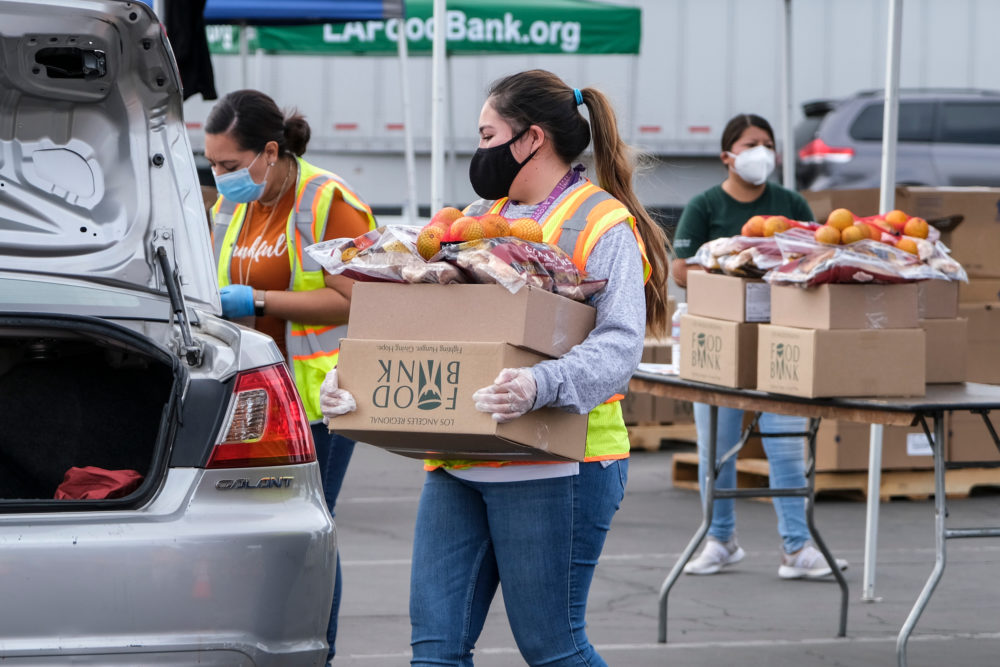
During many diaper banks, Baby’s Bounty partnered with the Culinary Academy of Las Vegas and Serving Our Kids to provide food to families in need.
Executive Director Kelly Maxwell said they realized that if parents were struggling to afford diapers, they were also likely struggling to afford food.
“We endeavored to make these diaper banks community events, partnering with other nonprofits to create a ‘one-stop shop’ for families in need,” said Maxwell.
Since its inception in May 2020, Baby’s Bounty has distributed 800,000 diapers and 2.5 million baby wipes to over 15,000 families. Serving Our Kids distributed 6,100 weekend food bags at their diaper banks alone.
Having doubled its programming, Baby’s Bounty relied on a mix of public and private funding to sustain itself and grow.
“When pitching our programming to the charitable decision-makers, I explain the amazing things that we are doing to help families in need in Southern Nevada and offer them the opportunity to participate in the process,” said Maxwell.
Baby’s Bounty has successfully raised funds from many large, national corporations, including Anthem Blue Cross, Citibank, Ultimate Fighting Championship and Wynn Resorts.
When Baby’s Bounty started the diaper bank, Maxwell said they reached out to one of their big partners, a medical provider, about sponsoring the program. They gave the sponsor figures on how many people Baby’s Bounty had already helped, and how many they expected to reach through the diaper banks.
Positive press coverage of the events brought in more money from private donors.
Maxwell said the program’s fundraising success was based on the clear effect it was having on community members in need.
Some nonprofits have pivoted from their original missions entirely.
Mighty Writers in Philadelphia went from a literacy program to a food bank during the pandemic and expanded to multiple sites throughout the city.
Staff started out giving out lunches to children at their 9th Street location, and then saw that the effort wasn’t enough.
“We had to give out groceries, and groceries grew into diapers and masks and wipes and books, and then we saw the other location needed all that help as well,” said Executive Director Tim Whitaker.
International Sports and Music Project’s founder Jason Steinberg pivoted from sports and music programs during COVID to provide hunger relief for more than 2,000 families facing food insecurity in both Uganda and Rwanda.
“Our donors also understand that the communities where we work are underserved and can be volatile, not to mention that we’re in a global pandemic,” said Steinberg. “When we explained the situation, that sports and music couldn’t happen, and that our partners had a new and unprecedented need for food security, everyone was on board with supporting that mission however we could.”
The Toolbox:
- See an opportunity. Step outside your comfort zone to serve the most urgent needs of your community.
- Sustain funding by being upfront and communicative with your donors.
- Partner with businesses big and small on everything from hosting events to launching new programs.
- Explain to donors that this is an opportunity to create a profound impact at a time when the community needs it most.