

Across the country, a growing number of organizations are working to fundamentally shift the culture of youth sports by transforming how we prepare and support the people at its heart: coaches. These leaders recognize that if sport is to fulfill its promise as a space for positive youth development, then coaching must be about far more than drills and playbooks. It must be about relationships, healing, community and purpose.

Courtesy of Dawn Anderson-Butcher
Dawn Anderson-Butcher
At the U.S. Soccer Foundation, that transformation begins with redefining the coach’s role. Through its Coach-Mentor model — used in both programs like Soccer for Success and as a standalone training for coaches of all sports — the Foundation prepares coaches to lead with empathy, build meaningful relationships and support the social and emotional needs of their players. But the benefits extend beyond the field: Coaches themselves often share they feel more connected, prepared and inspired to impact their communities when they are trained and supported as mentors. This dual-impact approach shows that investing in coach development isn’t just about improving outcomes for youth — it’s also about sustaining the adults who power youth sport every day and creating a cultural shift in coaching practices that have a community ripple effect.

Courtesy of Meghan Bartlett
Meghan Bartlett
This relational dimension is especially important in a world where many young people are carrying the invisible weight of trauma and adversity. The Center for Healing and Justice through Sport (CHJS) has emerged as a national leader in helping coaches create trauma-informed environments that foster safety and healing. Their groundbreaking resource, the Nothing Heals Like Sport — A New Playbook for Coaches, translates complex neuroscience into practical coaching strategies that any coach can implement immediately. Through practical and accessible training, CHJS supports coaches in recognizing the impact of stress on youth behavior, reframing discipline practices and cultivating empathy-driven team cultures which are essential for all youth to thrive, not only those affected by adversity. In doing so, CHJS isn’t just training coaches — they’re helping rewrite the norms that too often push youth out of sport.
But transforming coaching culture requires more than individual skill building; it requires systems of support. Laureus Sport for Good USA is tackling this challenge head-on through its Sport for Good Cities initiative. By bringing together sport and community stakeholders within place-based coalitions, Laureus is building local ecosystems where coaches can collaborate, learn and drive collective impact. In New York City, coach leaders meet regularly to share best practices on keeping more girls and female coaches in the game. In Chicago, they help conceive, plan and organize an annual Coaches Retreat. Coalitions in Atlanta and New Orleans create seats at the table for coaches on initiatives related to youth mental health and increasing access to sports in schools. When built alongside local coach leaders, these communities of practice break down silos, leverage networks to drive systemic change and ensure that the work of coaching is responsive to the realities of each community.
[Related: Competitive youth sports culture leads to burnout and quitting for many in U.S.]

Courtesy of Peter Feldman
Peter Feldman
A similar systems-oriented approach is unfolding in Ohio. LiFEsports at The Ohio State University, in partnership with the Ohio High School Athletic Association (OHSAA), school districts state-wide and multiple youth sport organizations, is leading Coach Beyond, an initiative to change the landscape of youth sport across the state of Ohio. Drawing from lessons learned from the proven LiFEsports model, Coach Beyond provides coaches with the tools and resources needed to “coach beyond the X’s and O’s.” Play-based, experiential trainings are offered in-person and on-line in areas such as supporting athlete mental health, fostering a positive team environment, developing leadership and life skills and improving mental performance among athletes. Importantly, Coach Beyond invites coaches to engage with one another across levels of sport — from youth leagues to high schools — building a shared language and commitment to athlete well-being. Further, the Coach Beyond state team is working together to inform policy and practice in support of more holistic coaching practices and improved sport contexts for youth.
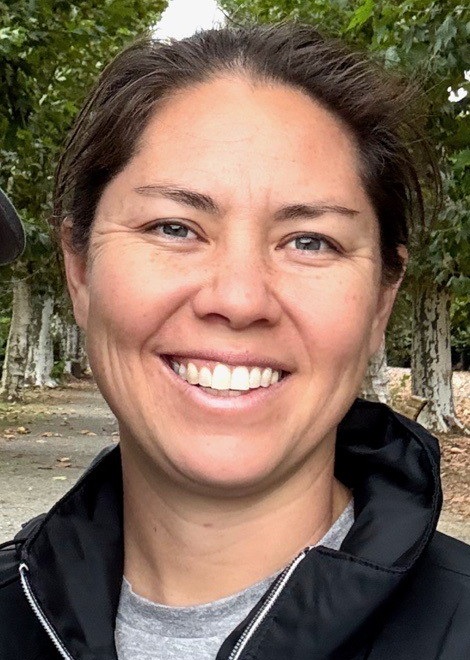
Courtesy of Katlin Okamoto
Katlin Okamoto
Taken together, these efforts reflect a broader cultural shift in youth sport — one that recognizes coaching as relational, emotional and deeply human work. These organizations aren’t simply adding new content to training manuals. They are investing in coaches as changemakers, as mentors and as part of interconnected learning communities that elevate both adult and youth development. They are also collaborating, sharing what works and taking collective action through the Million Coaches Challenge, a cohort of 16 partners funded by the Susan Crowne Exchange aiming to train one million coaches in youth development by 2025.
[Related: Reimagining youth sport — Putting positive youth development first]
Youth coaches often serve as some of the most consistent adults in a young person’s life. When we equip them with the tools, mindsets and communities they need to thrive, we amplify their impact and unlock the transformative potential of sport. The work is underway. Now it’s time to build on it. Whether you are a sport provider, parent/guardian or someone who wants to see better sport experiences for young people, you can advocate for coach training in your local community league, link up with existing local sport-based coalitions (or start your own if there isn’t one) pushing for greater youth sport quality and access and get involved with the Million Coaches Challenge.
***
Dawn Anderson-Butcher, PhD, LISW-S, CMPC is a professor at The Ohio State University where she co-leads LiFEsports and the Community and Youth Collaborative Institute. She has a PhD in sport psychology and is a licensed clinical social worker with expertise in children/adolescent mental health, youth sport and school-family-community partnerships.
As founder of the Center for Healing and Justice through Sport, Megan Bartlett champions inclusive coaching and developmentally informed approaches to create healing-centered sport opportunities for all young people.
Peter Feldman is the director of programs for Laureus USA and has more than 15 years of experience as a social impact and sports-based youth development professional. Along his career journey, he’s led and strengthened youth development programs in the Bronx and Brooklyn, taught graduate level courses at Adelphi University’s sports-based youth development program and served as a high school history teacher and basketball and baseball coach.
Katlin Okamoto is a national leader in sport-based youth development and currently serves as associate vice president of training, education and evaluation at the U.S. Soccer Foundation. Since joining in 2022, she has led the expansion of the foundation’s Coach-Mentor Training Program and now oversees the alignment of educational content across all programs, as well as the integration of research-driven practices to enhance coaching and mentorship nationwide.